
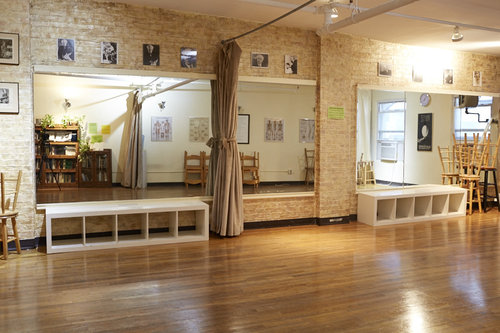
 I had the opportunity of studying Alexander technique at ACAT (American Center for the Alexander Technique) for one year. Alexander technique, developed by F.M. Alexander, is an educational process that teaches a set of skills for managing one’s mind and body towards the direction of lightness, freedom and ease.
I first learned about the technique while studying at The Drummer’s Collective in 2001. One of The Collective’s administrators (Sandra Reid) was an Alexander Teacher. During my first lesson Sandra guided me through an Alexander lie down called “Constructive rest.” This self-help tool involves lying down on a firm surface with knees elevated, feet flat on the floor, and some books or magazines under the head. This position promotes functional spinal alignment and creates an opportunity to release tension. It’s also a good moment to focus on your breath and observe small movements while experiencing good body use. Suffice it to say my body desperately needed this.
After my initial lesson, I continued Alexander work on and off for fifteen years. Most of my early lessons were based around sitting and standing up from a chair. The chair is an Alexander tool that is used to re-educate the body’s movement patterns. My body learned new patterns for sitting, standing and being in a chair. As a drummer and heavy computer user, this was extremely useful for me.
In 2016 I got into an unfortunate car wreck. I was lucky to have escaped without any permanent body damage but I did have nine bone fractures, soft tissue damage, and severe whiplash. I decided to take my AT practice more seriously and enrolled in the health and well-being program at ACAT in New York City.
This intensive style of study gave me an opportunity to practice and study Alexander Technique with master teachers for up to sixteen hours per week. The program also gave me a new perspective towards my drum teaching.
As private music teachers we have a ton of influence over our students (especially young beginners.) We tend to teach technique focusing only on the individual parts of the body. For example, most drum instructors teach stick technique from the hands and arms without considering the rest of the body. This specific viewpoint could be limiting for many reasons. The Alexander approach would take a look at the whole individual and then use the technique to re-educate movements that are needed to play the instrument (without added muscular tension) thus educating the student’s kinesthetic sense. For this reason, I think it’s important for students to have Alexander Technique lessons along with learning their instrument. This combination will go a long way towards avoiding any repetitive muscle injuries further down the road.
I’ve been able to incorporate Alexander technique into my music lessons by observing my students and giving verbal suggestions. For example, if a student is engaging muscles that aren’t needed to execute a particular drum pattern I would first make them aware of what they are doing and then ask him or her to see if they could play the pattern a different way that doesn’t require as much tension. I also utilize “Body mapping,” which is a developed modality that applies anatomy to help understand and improve movement. Many of my drum students improve their use after I explain how our bodies are built, where our joints are, and how our limbs and torsos can move more in alignment with this design. This new awareness could influence the way students use their bodies to drum which in time could inspire deeper exploration of their movements and kinesthetic sense.
If you’re interested in learning more about the Alexander Technique I recommend checking out Body Learning by Michael Gelb. This book explains what the Alexander Technique is as well as detailing some of the technique’s basic principals. I also recommend Back Trouble by Deborah Caplan for back pain and recovery.
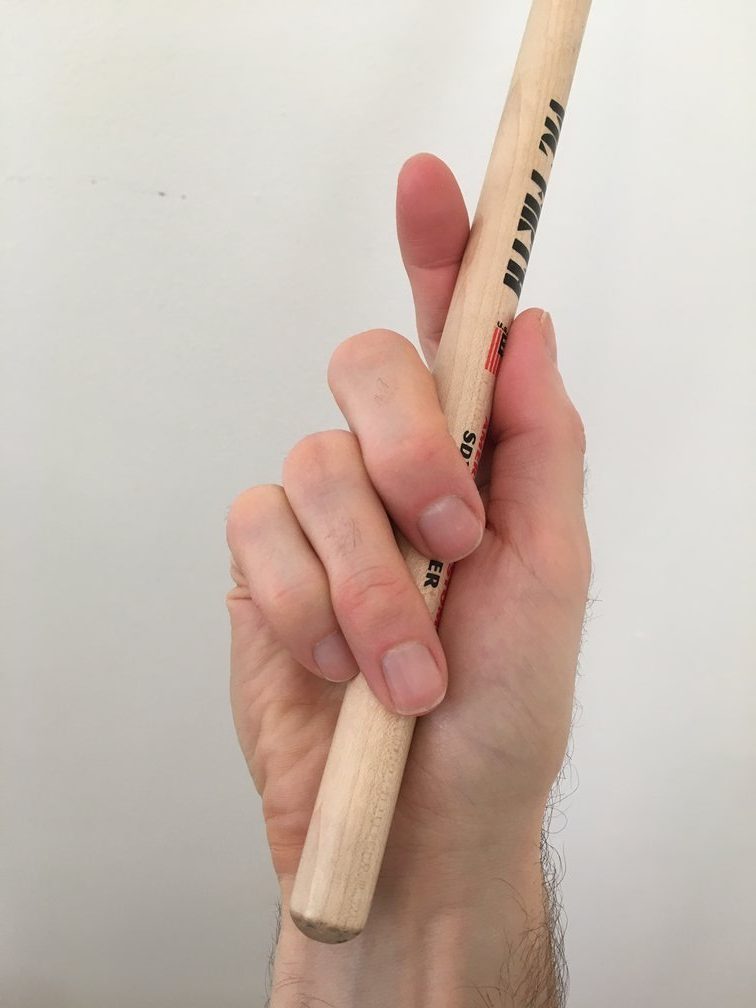

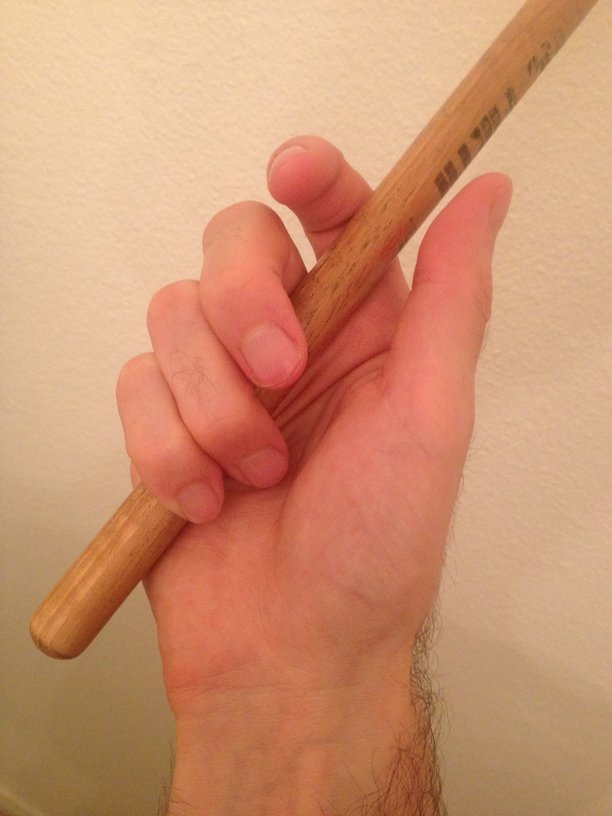
 . Moeller’s recommended right hand grip (Fig. 3) placed the fulcrum with the fourth finger. This enabled the snare drum players of his time to play downstrokes with more leverage while remaining relaxed. While we don’t see too many players utilizing it today, it could be considered as a training technique to build up strength in the back fingers.
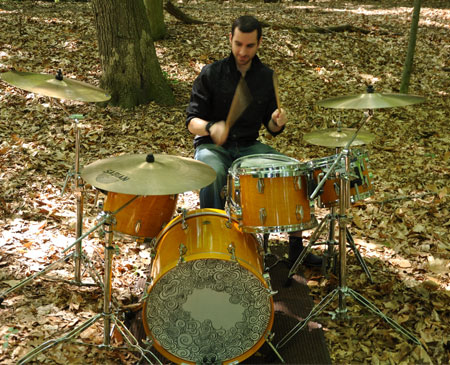
 I also recommend switching to a thicker stick which can make it easier to play utilizing a looser and wider grip. If you’re playing any heavy style of music I recommend a thick stick like Vic Firth’s
 – B12 reported to help with nerve conditions (CTS)
 – ALA has been reported to improve neuropathy symptoms and impairment (CTS)
 – MSM reported to help with arthritis, pain, and joint movement (RSI)
 – Reported to reduce inflammation and pain (CTS, RSI)
 – Reported to help with inflammation (CTS, RSI)